Research
Please click on selected field for more information.
For reprints of publications please contact the authors directly.
Bilingualism

Research interest: prof. Joanna Rokita-Jaśkow, dr Agata Wolanin, dr Katarzyna Nosidlak i dr Werona Król-Gierat
Access to publication: https://www.tandfonline.com/doi/full/10.1080/13670050.2022.2114788
About the project: Get ready for school
https://eduskills.plus/grfs
In 2018, approximately 6.9 million migrant children were present in the European Union, often lacking sufficient language skills that hinder their school readiness.
This project aims to address the language preparation needs of preschool children from migrant families, providing parents with tools to foster their children’s language competence and readiness for school.
As part of the project, a comprehensive platform will be developed, serving as a central hub for parents and teachers. This platform will focus on promoting multilingualism and fostering intercultural learning. Additionally, an e-learning app will be created, featuring modules that target vocabulary and language preparation for school. The app will be accessible in four languages – German, Lithuanian, Polish, and Slovenian.
To support language learning further, the project will provide guidelines for parents and suggest family activities that facilitate language development. Ultimately, the project aims to enhance the availability of e-learning materials for migrant parents and children, improving their access to language learning resources.
Partner organisations
- Kultur- und Bildungsprojekte e.V. (Niemcy) www.facebook.com/kubiproberlin/
- Studio Gaus GmbH (Niemcy) www.studiogaus.com
- Österreich Institut GmbH(Austria) www.oesterreichinstitut.at
- Inter-kulturo mednarodni kulturno izobraževalni center d.o.o. (Słowenia) www.interkulturo.si
- Uniwersytet Pedagogiczny im. Komisji Edukacji Narodowej w Krakowie (Polska) www.up.krakow.pl
- Vilniaus universitetas (Litwa) www.vu.lt
- Niedersaechsisches Institut fuer fruehkindliche Bildung und Entwicklung e.V. e.V. (Niemcy) www.nifbe.de
Early language education

Foreign language acquisition in children; psycholinguistic and sociolinguistic aspects of bilingualism and multilingualism; socio-pedagogical factors influencing the effectiveness of teaching; educational and language policy; teacher education and professional development.
Research on these issues has been conducted by Professor Joanna Rokita‑Jaśkow(National Science Centre grant 2011–2014: Early Language Start – An Expression of Parents’ Educational Aspirations or the Implementation of a Multilingualism Policy?).
This field is also studied by dr Werona Król‑Gierat
Wellbeing

- Kaplan-Rakowski, R. & Nowak, S. A. (2025). Virtual reality relaxation as a strategy for coping with foreign language anxiety. In Y. Choubsaz, P. Díez-Arcón, A. Gimeno-Sanz, V. Morgana, A. C. Murphy & F. L. Seracini (Eds.), Advancing CALL: New research agendas – EUROCALL 2025 Short Papers. https://doi.org/10.4995/EuroCALL2025.2025.21235
- Szulc-Kurpaska, M. & Nowak, S. (2024). Can We Modify Teacher Mindsets: Towards Well-being in Education. Theory and Practice of Second Language Acquisition. 10(2),http://journals.us.edu.pl/index.php/TAPSLA/article/view/13280/13767
- Nowak, S. A. i Szulc-Kurpaska, M. (2022). W kierunku dobrostanu (ang. wellbeing) przyszłych nauczycieli języków obcych. Języki Obce w Szkole. Numer 2/2022.https://jows.pl/artykuly/w-kierunku-dobrostanu-przyszlych-nauczycieli-jezykow-obcych
INTERCULTURAL EDUCATION

The area of expertise of dr Agnieszka Strzałka i dr Agata Wolanin.
The dynamic changes we are witnessing not only on the geopolitical stage but also in the realm of new technologies have intensified our contacts and interactions with others. One of the main goals of intercultural education is to foster dialogue, mutual learning, and the search for shared benefits arising from interactions between representatives of different cultures and communities. Raising cultural awareness, questioning ethnocentric attitudes, and encouraging critical reflection are among the many aspects of developing intercultural competence. In practice, however, implementing the principles of intercultural education is not straightforward. In her academic work, Dr. Agata Wolanin focuses on how to encourage foreign language students to engage in critical reflection on their own culture and the cultures of others.
Publications:
https://ksiegarniaup.pl/the-complexity-of-critical-cultural-awareness-in-l2-546611
https://link.springer.com/chapter/10.1007/978-3-030-66022-2_11
https://pressto.amu.edu.pl/index.php/n/article/view/19260
Special educational needs

Rodzice i nauczyciele obserwują w szkołach wrastającą liczbę uczniów o specjalnych potrzebach edukacyjnych. Naszym zadaniem jest stworzenie uczniom warunków szkolnych pozwalających kompensować trudności w nauce przy jednoczesnym rozpoznawaniu i wspieraniu ich uzdolnień. W celu umożliwienia im pełnego dostępu do edukacji potrzebne jest wsparcie ze strony wykwalifikowanych nauczycieli, którzy potrafią rozpoznać indywidualne potrzeby ucznia i dopasować metody nauczania do specyficznych potrzeb swoich uczniów. Jak skutecznie uczyć języka angielskiego uczniów z dysleksją, autyzmem, ADHD i innymi specjalnymi potrzebami edukacyjnymi?
Badania na ten temat prowadzą dr Werona Król-Gierat.
Access to publication: http://www.wydawnictwoup.pl/848/Teaching-English-to-Children-with-Special-Educational-Needs.html
EXTRAMURAL ENGLISH
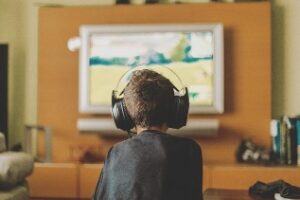
Over the past fifteen years, researchers of foreign language acquisition have focused on the influence of extracurricular factors – those extending beyond the framework of formal education – on the language learning process (cf. Sundqvist, 2009; Sylven, Sunqvist, 2012; De Wilde, Brysbaert, Eyckmans, 2020; Muñoz, Cadierno, 2021). Exposure to informal English, which has become not only an international language but also the dominant language in the online space, is widespread and increasingly intensive. In her research, Dr. Agata Wolanin examines the impact of extramural exposure to English on students’ language competence and their motivation to learn.
Publications:
https://pressto.amu.edu.pl/index.php/n/article/view/45177
https://czasopisma.uwm.edu.pl/index.php/pj/article/view/11843